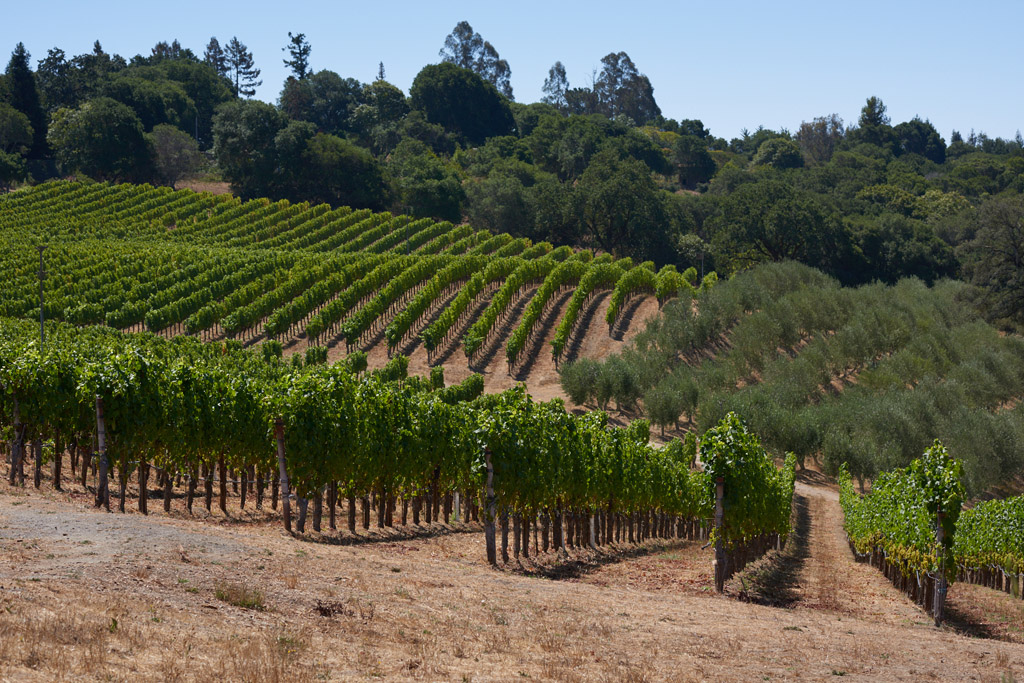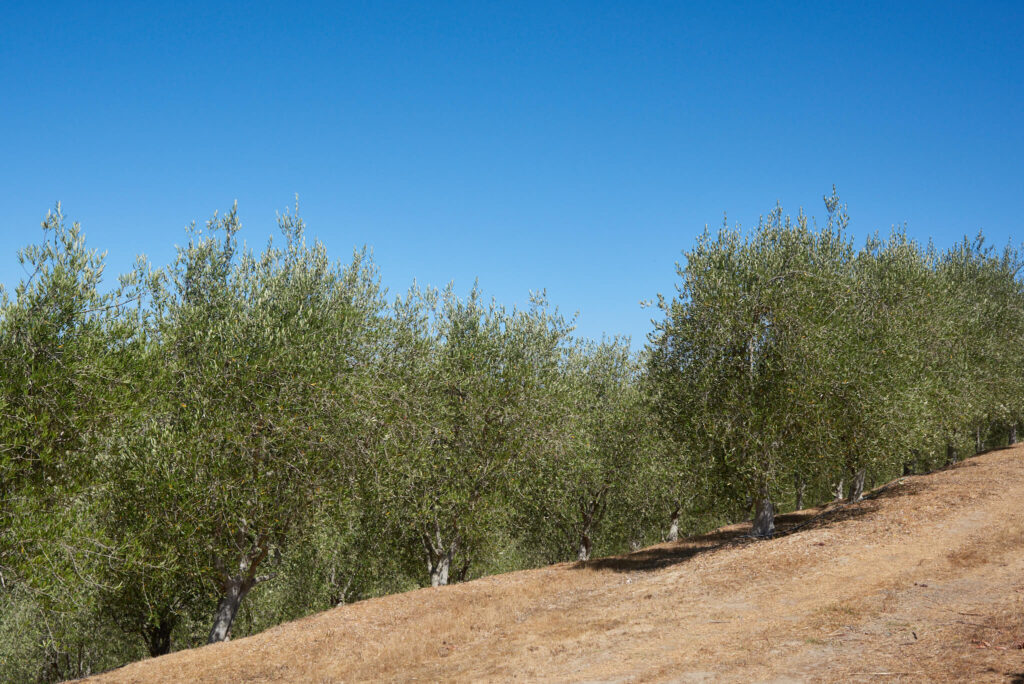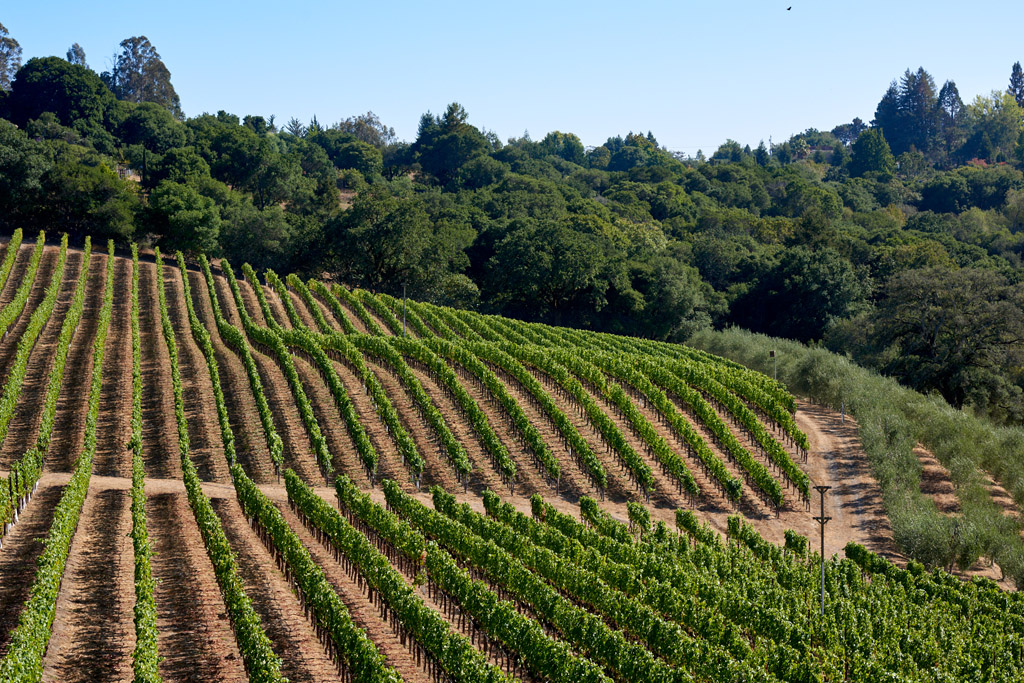
Our commitment to sustainability at Baker Lane Vineyards has now, after living and 'growing' there for nine years, become a process of evolution and and maturation, one that parallels the development of the vines themselves. What
started with a great deal of engineering and careful redrawing of much of our entire site has completely shifted to a new phase. We are now heavily engaged in a process of observation, careful management, and an increasing focus on
wholistic integration (an approach guided by the implementation of many bio-dynamic principles).
In farming, something that has proven to be true is that empirical insight piles up rather rapidly, especially as we have reckoned with
some of the last few year's climatic extremes. Were it not driven by a passionate commitment to quality (and an effort that also entails considerable financial exposure), it would be an endlessly fascinating experience. It actually is an
enduringly gratifying and open-ended learning opportunity, although it would go neither unnoticed or unappreciated if some of the more unpredictable challenges of being custodians of this beautiful corner of Sonoma County took a
break now and then.
That said, being at the viticultural climatic edge, has shown itself to be at the very heart of the quality potential of Baker Lane. Any analysis of the various classic viticultural zones throughout Europe would reveal that the defining grape
in each of those areas is one that just barely achieves ripeness in any given season. It turns out that the extended hangtime and long, slow accumulation of flavor detail that occurs in our vineyard sites manifestly mimics the historical
pattern of many of the world's greatest grape growing regions. The late harvests that are typical in our sites do much to solidify the presence of the vineyard personality i.e. the sense of terroir, in our wines. Becoming deeply familiar
with that flavor thumbprint has constantly informed the key farming decisions that drive our viticultural approach. In this regard (and in many others, not the least of which is the understanding that no great wine is made without great
fruit), we are ever more driven to be winegrowers. Producing the most balanced and fully flavored grapes that our vineyards can produce (while aiming to gently and naturally shepherd it all in to the bottle) is how we define this
winegrowing perspective. It is all about place, after all, and we're honored to pursue this path with our Baker Lane Vineyards.
The Ramondo Vineyard
Working with the Ramondo vineyard, our neighbor on Baker Lane, has allowed us to both expand the sources of our fruit and the qualitative oversight of it. Their property, the only other significant vineyard on Baker Lane, is a scant quarter mile east of our Estate vineyard. We had tasted and admired several wines produced from their fruit in the past, so we didn’t hesitate when the opportunity to work with their vineyard arose. They have approximately 4 acres of Pinot Noir, and
1.25 of Syrah, and both varietals excel at their site. Since assuming agricultural responsibility for the vineyard, in particular working hard to implement organic standards and environmentally sustainable viticultural protocols, we’re
pleased to have this outstanding site in the Baker Lane portfolio.